We’ll break down the calculation clearly in this article.
For PET recyclers, energy consumption is the top concern when selecting an solid-state polymerization reactor, as it directly determines the subsequent processing cost.
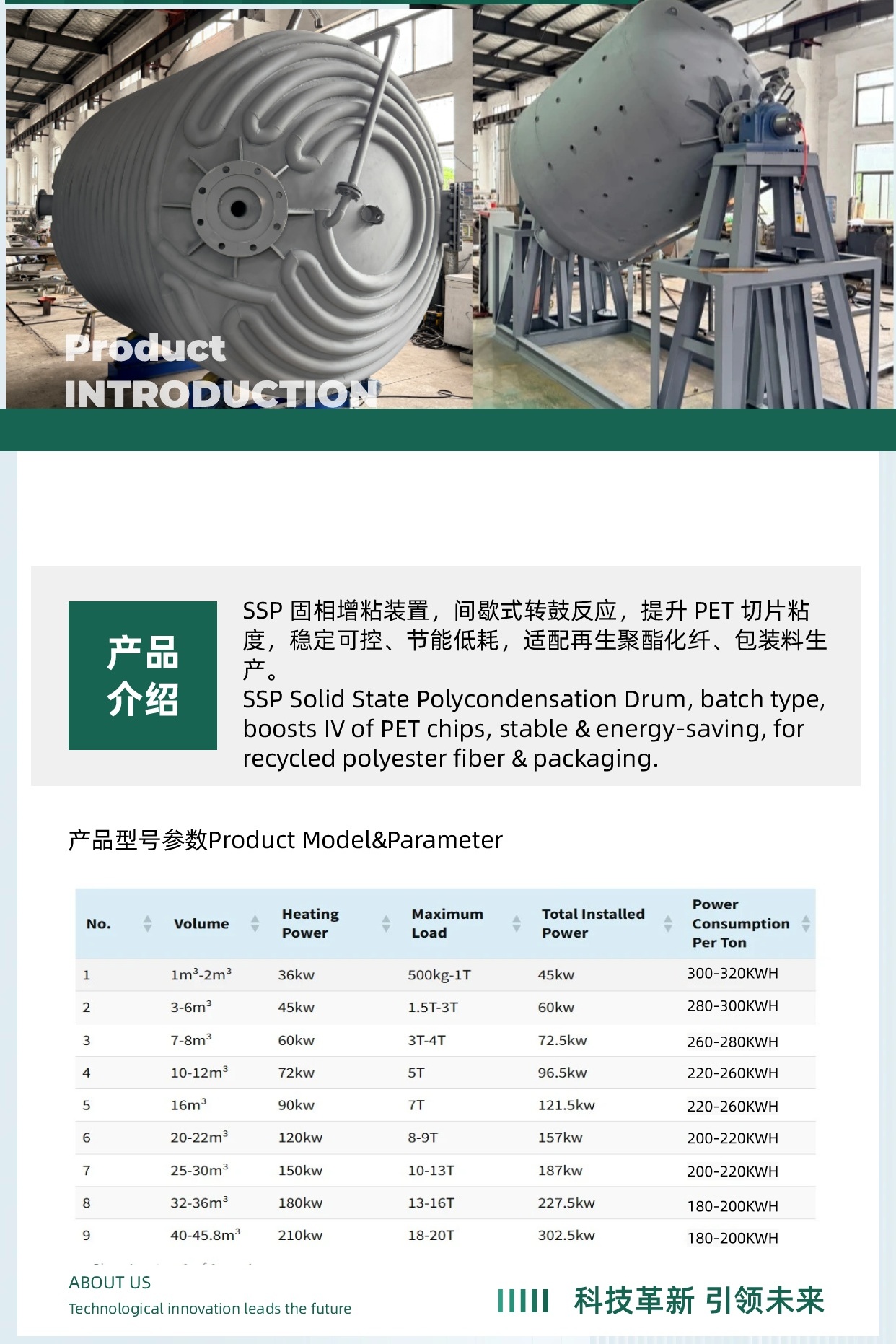
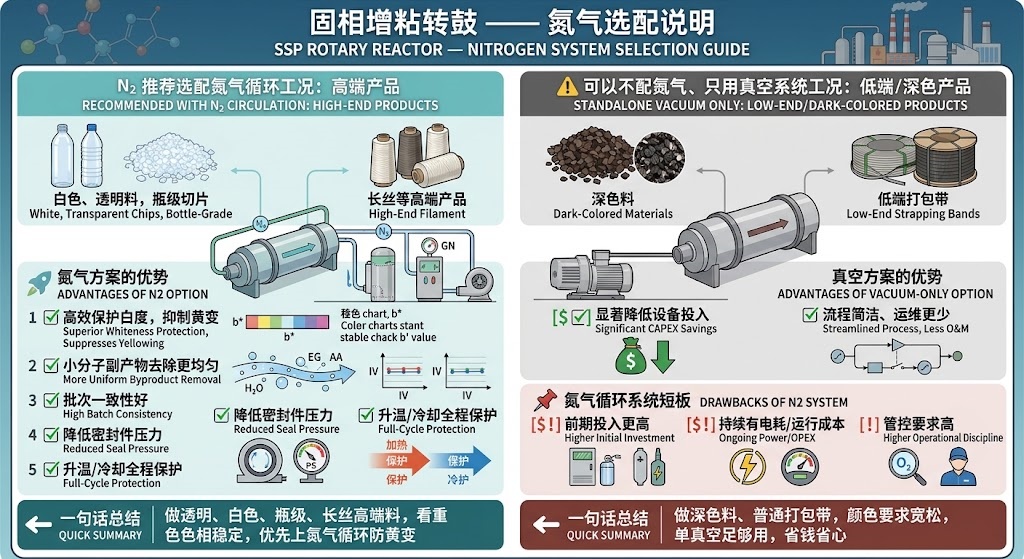
Take our energy-saving half-coil rotary drum SSP, the widely used 12m³ model, as an example: Dried crushed PET flakes material takes only 16 hours to raise its intrinsic viscosity (IV) to 0.85 for producing high-quality strapping bands, filaments and fibers. The batch capacity is around 4.2 tons. Its actual power consumption is approximately 60–70 kWh per hour (nitrogen generator set excluded), equivalent to 228–267 kWh per ton. If the optional nitrogen circulation system is equipped, the total power consumption will rise by about 15 kWh per hour. The screw air compressor accounts for the largest energy draw. Larger reactor volume means lower energy consumption per ton of output.
Key factors affecting energy consumption:
- Feedstock condition: Wet or washed flakes with low initial IV lead to higher energy consumption; clean and dry bottle flakes require shorter viscosity build-up time and consume less power.
- Target IV: A higher target viscosity requires longer heat retention and reaction time, which increases power usage.
Compared with conventional jacketed SSP reactors, our half-coil high-capacity SSP reactor for polymer recycling delivers outstanding energy savings, with less heat transfer oil consumption and lower power draw.
Energy consumption per ton of material is the key to long-term profitability!
0 Comments